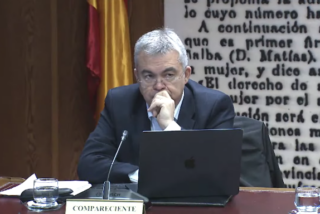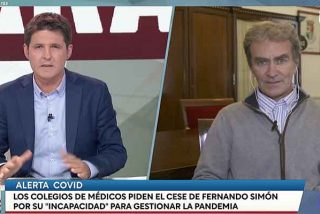
Tiene una cara que se la pisa. El mismo Fernando Simón que no ha acertado ni una, el que pronosticaba que en España habría un par de casos de coronavirus y poco más, el que miraba para otro lado cuando Pablo Iglesias se saltaba el confinamiento y llegó a comentar que si su hijo le preguntaba sobre sobre ir o no ir al aquellarre feminista del 8M, le diría ‘haz lo que quieras‘, para no enfadar a sus jefes, escribe ahora que le duele que en España se politice la pandemia.
El incompetente director del Centro de Coordinación de Alertas y Emergencias Sanitarias, ha publicado junto a su equipo una carta en la revista ‘The Lancet‘ en la que defiende la gestión que se ha realizado en España contra el coronavirus, vuelve a mentir sobre sus ‘expertos’, exculpa de todo al Ejecutivo que le paga y tarta de taparse el trasero.
Simón, sin atreverse por supuesto a señalar al Gobierno PSOE-Podemos, que es el principal responsable, dice que existe un «clima desafortunado de confrontación».
Y que ese clima está impregnando a los diferentes sectores, esté provocando que la comunicación eficaz de crisis sea un «desafío».
Añade que, además, está «probablemente» perjudicando los esfuerzos de respuesta frente al Covid-19.
LA CARTA DE SIMON Y SUS COLEGAS
COVID-19 in Spain: view from the eye of the storm
An earlier start to the second COVID-19 epidemic wave in Spain compared with other European countries has raised overt criticism to their public health administrations’ response.
We want to contribute to this debate constructively, sharing our perspective as public health professionals involved in the response, even if many aspects are outside our direct remit.
Spain greatly increased its response capacities after the first wave of this virus. An improved test-trace-isolate strategy was implemented in May and, by late June, more than 80% of patients suspected to have COVID-19 were PCR-tested within 24–48 h, and 90% of patients had their contacts traced (Monge S, unpublished). PCR capacities were similar to that of other countries and have been further strengthened (with a current national weekly testing rate of 2·563 per 100 000 inhabitants), and the public health workforce has increased by three times.
On the basis of a national seroprevalence study, we estimate the current detection capacity to be at 60–80% of infected individuals.
All strategies and protocols were integrated into an updated early response plan, adapted at the regional level, including provisions for increasing epidemiological surveillance, test-trace-isolate procedures, strategic reserves, and health-care capacity, among others, which was adopted in July. However, weaknesses persist in the system, with chronic underinvestment in primary health care, public health, digitalisation, research and innovation, bureaucratic procedures, and with little availability of trained professionals.
Difficult decisions are being made, weighing scientific evidence, uncertainties, feasibility, and costs. Collaboration between public health administration and more than 30 scientific societies5 has been ongoing since January, and external experts have advised strategic decisions.
Multiple interterritorial working groups exist, at levels from technical to highly political, meeting at least once per week, achieving fluent interterritorial dialogue and coordinated decision making. Extensive and transparent information for daily epidemic monitoring is available, based on exhaustive individual case information received daily at the national level. The wider availability of detailed data can help to strengthen scientific community engagement and increase public trust; work is ongoing in this direction.
Evaluation is a key component for system improvement. Thus, the WHO-proposed intra-action review has been done at the national level (report under development). Wider evaluations (of which the terms of reference are in progress) and epidemiological research can further elucidate the main factors influencing the progression of the epidemic, and the short-term and long-term changes that are most needed.
Factors such as existing susceptible and hard-to-reach groups, structural inequalities, population age (among the oldest in the world), limits in welfare policies, cultural and social interactions, and high mobility rates should be accounted for to explain the epidemic in Spain.
In the current scenario, maintaining and further strengthening response capacities are challenges for all who are involved; community engagement and the effective implementation of control measures need to overcome pandemic fatigue. Politicisation and an unfortunate climate of confrontation permeating different sectors makes effective crisis communication challenging and is likely to impair response efforts.
We declare no competing interests.
María José Sierra Moros /Susana Monge /Berta Suarez Rodríguez/ Lucía García San Miguel/ Fernando Simón Soria on behalf of allsignatories†